The Importance of Accurate Temperature Ratings
Planning a camping trip involves many crucial steps. You must choose the perfect location. You need to pack the right food. However, one of the most critical aspects involves selecting the right sleep system. Many campers often overlook the significance of sleeping bag temperature ratings. They might simply pick a bag that looks warm. Or they might choose based on the lowest price. This approach can lead to uncomfortable or even dangerous nights in the wilderness. Understanding these ratings is essential for your safety and enjoyment. Essentially, these numbers provide a guideline for the lowest temperature at which the bag will keep you warm. But these numbers are not absolute truths.
They are results from standardized laboratory tests. Therefore, you must learn how to interpret them correctly. Furthermore, personal physiology plays a massive role in how warm you feel. What works for one person might not work for another. In this article, we will decode the mystery behind these numbers. We will explore the testing standards and the different rating types. Consequently, you will be equipped to make the best choice for your next outdoor adventure.
Understanding the ISO and EN Standards
In the past, manufacturers used their own methods to rate sleeping bags. This created confusion for consumers. A bag rated for 20 degrees by one brand might feel colder than a bag rated for 30 degrees by another. Consequently, the industry adopted standardized testing protocols. The European Norm (EN) 13537 was the first widely accepted standard. Today, this has largely been replaced by the International Organization for Standardization (ISO) 23537. These standards provide a consistent way to measure a sleeping bag’s performance.
- Standardized Testing: Laboratories use a heated mannequin dressed in thermal underwear. The mannequin is placed inside the sleeping bag on a standard sleeping pad. Sensors measure the heat loss.
- Thermal Mannequin: This dummy simulates a human body. It allows scientists to calculate specific temperature limits. This removes the subjective “feeling” of a human tester.
- Reproducibility: Because the tests are standardized, you can compare bags from different brands accurately. This levels the playing field for all manufacturers.
- The Four Ratings: The standards define four specific temperature points. These are the Upper Limit, Comfort, Lower Limit, and Extreme. We will explore these in detail in the next section.
Therefore, looking for the ISO or EN label on a sleeping bag is your first step toward safety. It guarantees that the numbers on the tag are reliable and scientifically verified.
Breaking Down the Four Temperature Zones
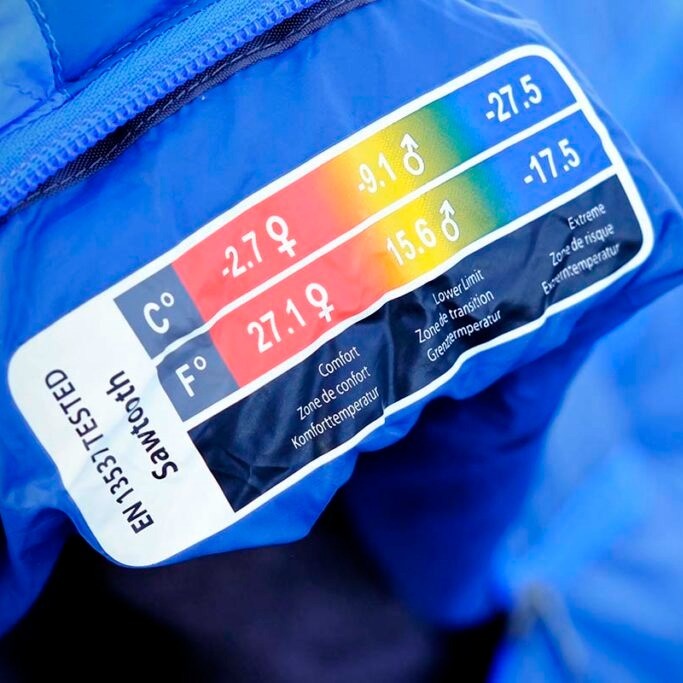
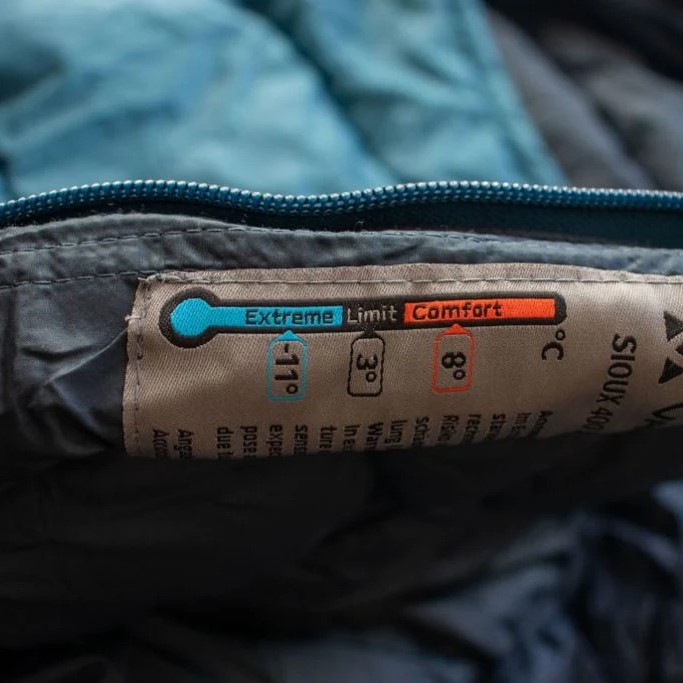
When you look at the tag on a high-quality sleeping bag, you will usually see four distinct temperature ratings. Understanding the difference between them is vital for choosing the right gear. These ratings are based on the thermal mannequin test mentioned earlier.
- Upper Limit: This is the highest temperature at which a standard man can sleep without excessive sweating. It is less commonly discussed but important for summer camping. If the night is warmer than this, you might feel too hot.
- Comfort Rating: This is the most important number for most campers. It indicates the temperature at which a standard woman can sleep comfortably. Women generally feel colder than men. Therefore, this rating is often used as the baseline for recreational campers.
- Lower Limit: This rating indicates the temperature at which a standard man can sleep for eight hours without waking up cold. It assumes the sleeper is curled up to conserve heat. This is the rating often highlighted on product tags for “survival” or technical use.
- Extreme Rating: This is the absolute maximum limit. It represents the temperature where a standard woman faces a risk of hypothermia. You should never rely on this rating for a comfortable night’s sleep. It is strictly a survival warning.
Consequently, the Comfort Rating is the safest number to follow for a good night’s rest. Always prioritize this over the Lower Limit if you value warmth.
Gender Differences and Metabolic Rates
The ISO standards account for biological differences between men and women. Generally, men tend to sleep warmer than women. This is due to metabolic rates and body composition. The standard defines a “standard man” and a “standard woman” for their tests.
- Metabolism: Men often have higher metabolic rates. This means they generate more body heat while sleeping. Consequently, they can sleep comfortably at lower temperatures than women in the same bag.
- Body Composition: Women typically have different body fat distribution. This can affect how they perceive cold. The Comfort Rating is specifically tailored to a standard woman’s physiology.
- Personal Variance: These standards are based on averages. You might be a “cold sleeper” or a “warm sleeper.” If you know you sleep cold, you should add about 10 degrees to the Comfort Rating. For example, if a bag is rated to 30°F, treat it like a 40°F bag.
- Age Factors: Age also plays a role. Older adults often have more difficulty regulating body temperature. Therefore, older campers should opt for warmer bags.
Understanding your own body is just as important as understanding the tag. Do not rely solely on the manufacturer’s numbers. Adjust your choice based on your personal sleep history.
The Role of Insulation Types
The type of insulation inside the bag significantly impacts the temperature rating. There are two main categories: down and synthetic. Each has its own strengths and weaknesses regarding warmth and weight.
- Down Insulation: Down comes from ducks or geese. It offers the best warmth-to-weight ratio. It is incredibly compressible. High-quality down bags can achieve very low temperature ratings with very little weight. However, down loses its insulating power when wet. It is also more expensive.
- Synthetic Insulation: This is made from polyester fibers. It is generally cheaper than down. Synthetic insulation retains warmth even when damp. It dries much faster. However, it is heavier and bulkier. A synthetic bag rated for the same temperature will take up more space in your backpack.
- Fill Power: For down bags, fill power measures the loft or “fluffiness” of the down. A higher fill power means more warmth for less weight. A 850-fill-power bag is warmer and lighter than a 600-fill-power bag of the same weight.
Therefore, the insulation type dictates how the bag performs in different conditions. Choose down for dry, cold environments. Choose synthetic for wet or damp conditions.
Sleeping Pad R-Value and Its Impact
Many campers make a critical mistake. They buy a high-quality sleeping bag but use a thin, cheap sleeping pad. This completely undermines the sleeping bag temperature ratings. The ground is significantly colder than the air.
- Conduction: Your body weight compresses the insulation under your back. This eliminates the loft of the sleeping bag. Consequently, the cold ground sucks the heat right out of you.
- R-Value: Sleeping pads have an R-value. This measures their thermal resistance. A higher R-value means better insulation from the ground. The sleeping bag industry now uses a standard R-value system to help consumers.
- System Approach: You must view your sleep system as a partnership. A winter bag needs a winter pad (R-value of 5 or higher). A summer bag can work with a lighter pad (R-value of 2 to 3).
- Combined Effect: If you sleep on snow with a summer pad, no sleeping bag will keep you warm. Therefore, always match your pad’s R-value to your sleeping bag’s temperature rating.
Your sleeping pad is the foundation of your warmth. Do not neglect this essential piece of gear. It works in tandem with your bag to create a thermal barrier.
Tips for Managing Your Warmth
Even with the perfect sleeping bag, your behavior affects your warmth. There are several active steps you can take to stay warm during the night. These tips can help you push the limits of your gear safely.
- Eat a Late Snack: Your body needs fuel to generate heat. Eat a snack high in fat or protein before bed. This keeps your metabolism running throughout the night.
- Stay Hydrated: Dehydration makes you feel colder. Drink plenty of water during the day. However, limit fluids right before bed to avoid late-night bathroom trips.
- Wear Dry Layers: Never sleep in the clothes you wore during the day. They contain sweat and moisture. Change into dry thermal underwear. Wear a beanie to prevent heat loss from your head.
- Use a Liner: A sleeping bag liner can add significant warmth. A fleece or thermal liner can boost the bag’s rating by 10 to 15 degrees. It also keeps your bag clean.
- Ventilate: If you start to sweat, unzip the bag slightly. Sweat is the enemy of warmth. Moisture inside the bag reduces the insulation’s effectiveness.
By managing these variables, you can maximize the efficiency of your sleeping bag. You control your comfort level to a large degree.
Seasonal Categories Explained
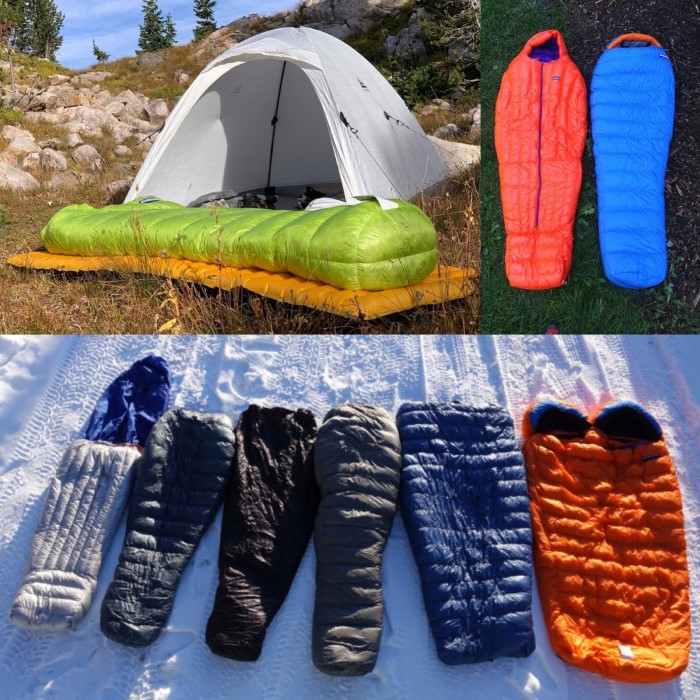
Manufacturers often categorize bags by season. This is a simplified way to understand temperature ratings. However, it can be vague. Here is a breakdown of what these categories typically mean.
- Summer (1 Season): These bags are designed for hot weather. They usually have a Comfort Rating above 40°F (4°C). They are lightweight and highly breathable. They are perfect for backyard camping or hot summer nights.
- 3-Season: This is the most popular category. These bags are designed for spring, summer, and fall. They typically have Comfort Ratings between 15°F and 40°F (-9°C to 4°C). They can handle light frost but are not suitable for heavy snow.
- Winter (4 Season): These are heavy-duty bags. They are built for snow and freezing temperatures. Their Comfort Rating is usually below 15°F (-9°C). They feature extra insulation and draft tubes to prevent cold spots.
- Expedition: These are specialized bags for extreme altitudes or polar regions. They are rated for temperatures well below zero. They are heavy, bulky, and expensive.
Knowing these categories helps you narrow your search. However, always check the specific temperature rating. A “3-season” bag from one brand might be warmer than another.
FAQ
Is 2.5 tog too warm for 21 degrees?
A 2.5 tog sleeping bag is generally considered perfect for room temperatures between 15 and 21 degrees Celsius. Therefore, it might be slightly on the warmer side for a room that is consistently at 21 degrees. You should monitor the child or user for sweating. You can adjust their clothing layers underneath the bag. For example, use lighter pajamas instead of thick fleece.
What is a 40-degree sleeping bag good for?
A 40-degree sleeping bag is excellent for warm summer camping trips. It is suitable for indoor use in heated homes or hostels. It is also great for backpacking in hot climates where weight is a priority. However, it is not suitable for cool nights or high altitudes. Temperatures often drop significantly at night. Always check the weather forecast before using a high-temperature rated bag.
Do I really need a 0 degree sleeping bag?
You need a 0-degree sleeping bag if you plan to camp in freezing conditions. It is essential for winter camping or high-altitude mountaineering. If you only camp in the summer, a 0-degree bag will likely be too hot and heavy. However, if you are a cold sleeper, a 0-degree bag offers a good safety margin for spring and autumn trips. It provides versatility for three-season use.
Conclusion
Choosing the right sleeping gear does not have to be a guessing game. By understanding sleeping bag temperature ratings, you can make an informed decision. You now know the difference between the Comfort and Lower Limit ratings. You understand the role of the ISO standard. Furthermore, you realize the importance of a good sleeping pad and proper clothing. Always remember that ratings are a guideline, not a guarantee. Consider your own body’s needs. Add a buffer for safety if you sleep cold. With this knowledge, you are ready to select the perfect sleeping bag. You can now camp confidently in any weather condition. Enjoy your warm and restful nights under the stars.